Comparing fashion trends from one season to another often comes down to listing colors and cuts. This season, an external factor changes the game: the French regulation on ultra fast fashion, which comes into effect on September 1, 2026, alters prices, brand visibility, and consequently, the available clothing choices. Measuring the impact of this law on fashion trends allows us to distinguish underlying movements from mere window dressing effects.
Environmental penalty and clothing prices: what changes concretely
Law No. 2026-602 of July 8, 2026, introduces an environmental penalty per item for ultra fast fashion platforms. The ceiling reaches 50% of the price excluding taxes of the item, with a gradual increase planned until 2030. Online interface operators like Shein or Temu are directly targeted.
For consumers, the direct consequence is an increase in the prices of very low-cost items. Dresses, tops, and jeans sold for a few euros will see their prices rise, reducing the gap with mid-range brands.
| Criteria | Ultra fast fashion (before Sept. 2026) | Ultra fast fashion (after Sept. 2026) | Mid-range |
|---|---|---|---|
| Environmental penalty | None | Up to 50% of the price excluding taxes | Not concerned |
| Display of environmental impact | Optional | Mandatory, at the same level as price | Recommended |
| Advertising allowed (from Jan. 2027) | Yes | Prohibited, including via influencers | Yes |
| Fine for advertising violations | – | Up to €100,000 | – |
This table summarizes the asymmetries created by the regulation. The ultra fast fashion segment simultaneously loses its price advantage and its main promotional lever: social media. Following fashion trends on Style Papers helps to spot the pieces gaining visibility in this new regulatory context.
Fall 2026 fashion trends: the pieces benefiting from demand transfer
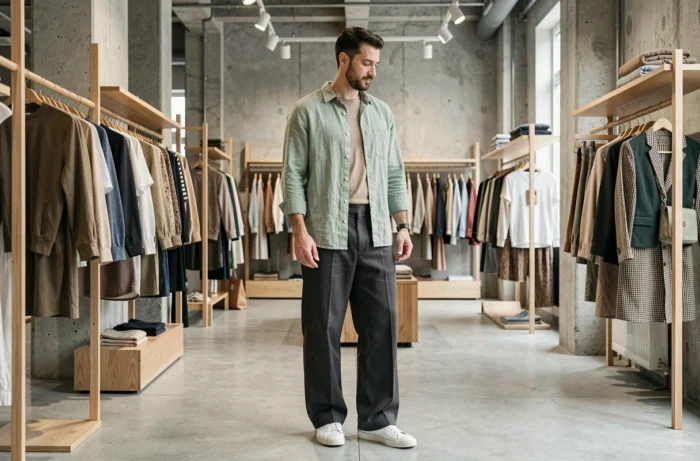
When fast fashion platforms lose their appeal, demand shifts. Several categories of clothing capture this transfer, not by chance, but because they meet a perceived need for sustainability and a strong style.
The flowy long dress and structured wide pants
These two pieces, already identified on the runways of Milan and Paris for the Spring-Summer 2026 collections, maintain their place into the fall. The flowy long dress, worn by houses like Loewe or Saint Laurent, features bold colors: orange, olive green, sky blue. The structured wide pants, with a defined waist and loose fit, pair well with a blazer or a short jacket.
These pieces resist rapid turnover because they combine easily. A wardrobe built around three or four versatile basics makes compulsive buying of micro-trends unnecessary.
The barrel jeans and coordinated set
The barrel jeans, with their rounded cut at the thighs and tapered at the ankle, emerge as an alternative to slim and wide-leg styles. The coordinated set (matching top and bottom, sometimes with a jacket) simplifies the composition of a look while creating a strong visual impact.
These choices are not new, but their adoption accelerates as the entry cost of disposable alternatives increases.
Fall-Winter 2026 colors: between chartreuse green and natural tones
Research data from the Lyst platform shows a 28% increase in searches for the color chartreuse, which establishes itself as a strong shade for Fall 2026. This bright yellow-green contrasts with the usual neutral palettes of the cold season.
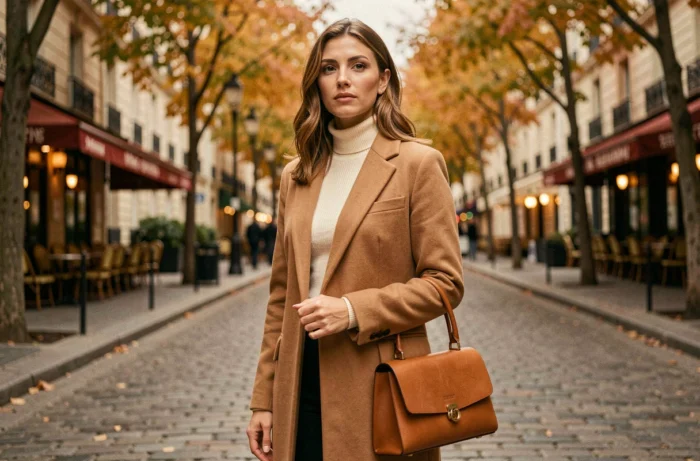
Meanwhile, natural tones (beige, brown, off-white) remain safe bets. The contrast between a chartreuse piece and a neutral ensemble creates a stylish effect without requiring a complete wardrobe overhaul.
- Chartreuse: to be used in touches (bag, sweater, scarf) to avoid visual saturation
- Beige and brown: ideal base for fall-winter layering, compatible with most body types
- Orange and butter yellow: carried over from spring-summer, they are worn as accessories or in lightweight knit under a structured jacket
- Sky blue: unconventional for fall, it works as a shirt or dress worn with boots
Fashion influencers and advertising ban: what effect on visible style
Starting January 1, 2027, advertising for ultra fast fashion will be prohibited, including via commercial influencers. Violations expose to a fine of up to €100,000. This point alters the very nature of fashion content shared on French social media.
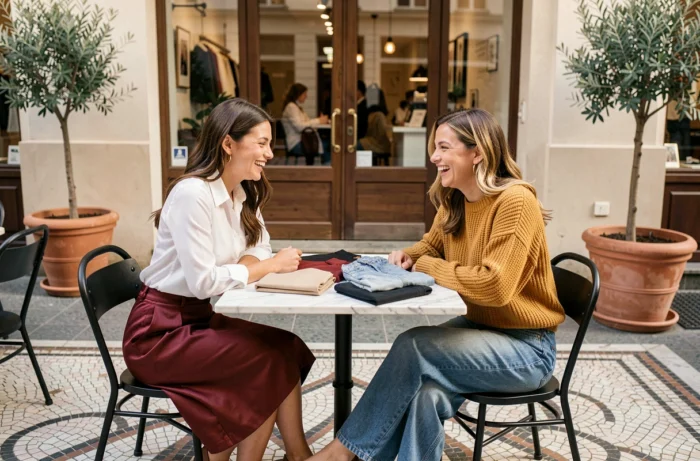
Content creators will need to explicitly distinguish partnerships with brands falling under ultra fast fashion, or simply cease these collaborations. In practice, the most shared looks online will be those associated with brands outside the scope of the law.
This shift has a concrete effect on the perception of trends. The pieces promoted on Instagram or TikTok will reflect more the offerings of mid-range and accessible premium segments. Consumers who built their style around ultra fast fashion hauls will need to adapt their approach.
- Identify brands that remain visible in advertising to understand trend biases
- Check the display of environmental impact, now mandatory on the relevant platforms
- Favor versatile pieces over short-lived micro-trends
Building a style season after season: sustainable trade-offs
Fall-Winter 2026 fashion can be viewed through two lenses. The first, aesthetic, highlights Victorian romanticism (noted in Alexa Chung), structured volumes, and bright colors against a neutral background. The second, economic and regulatory, pushes towards less frequent and more thoughtful purchases.
A wardrobe of four to five key pieces covers most situations: a flowy dress, wide pants, barrel jeans, a blazer, and an accessory in a strong color. The rest pertains to the seasonal rotation of accessories, not a complete renewal.
The environmental penalty does not make fashion less accessible. It redistributes the cards among market segments and makes clothing choices that last multiple seasons more readable.