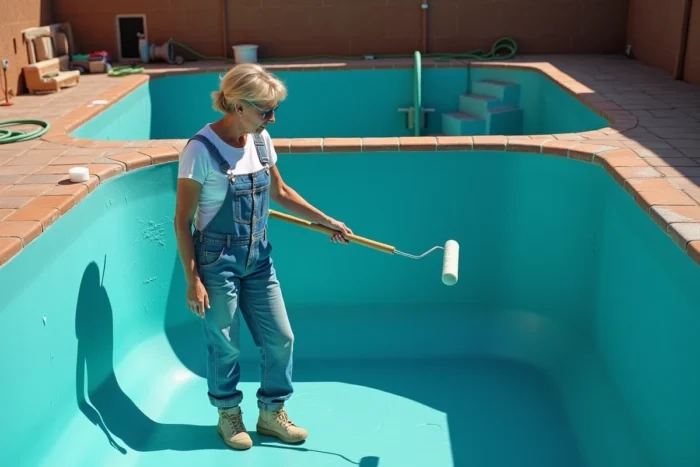
A concrete pool with peeling or discolored coating poses more than just an aesthetic problem. The degraded paint exposes the substrate to infiltrations, embedded limescale deposits, and the proliferation of algae in micro-cracks. Repainting a pool with suitable paint restores the waterproofing of the substrate while changing the visual aspect of the water, for a fraction of the cost of a new liner or polyester shell.
Identify the old paint before choosing the new one
Most pool renovation guides focus on cleaning or color choice. The real starting point is the chemical compatibility between the old coating and the new product. Applying incompatible paint causes blistering and peeling within a few weeks of immersion.
Three main families of pool paints coexist on the market: water-based acrylic, chlorinated rubber (or synthetic), and epoxy. Their layering rules are strict.
- Water-based acrylic paint can be applied over any type of existing pool paint, making it the most versatile option for renovations.
- Chlorinated rubber paint can only be applied over a coating of the same nature. Its availability is also decreasing due to environmental restrictions related to solvents.
- Epoxy paint can only be applied over an old epoxy coating. It offers superior mechanical resistance but requires a more rigorous preparation protocol.
To determine what coating is already in place, a simple test involves rubbing a cloth soaked in solvent (such as xylene) on a discreet area. If the paint softens, it is chlorinated or synthetic rubber. If it resists, it is likely an epoxy or hardened acrylic. This diagnosis avoids a costly failure. Comparing the paint prices with Alter Ec Home also helps to decide between these families based on the overall renovation budget.
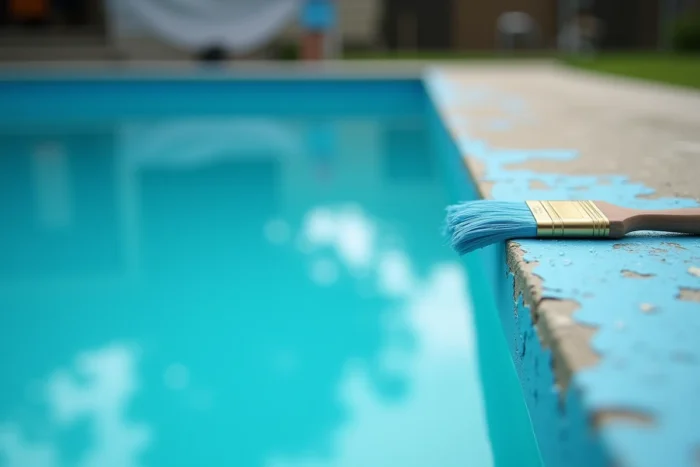
Preparation of the concrete pool: humidity level as a risk criterion
Preparing the substrate takes more time than the painting itself. On a previously painted pool, it is not enough to lightly sand. The old coating must be removed down to the bare concrete, through complete mechanical sanding or sandblasting, to ensure the new product adheres properly.
On a new pool, the drying times of the substrate are a common trap. A poured concrete must wait at least 60 days of drying before any paint application. A hydraulic render requires a minimum of 28 days. Painting too early traps residual moisture, which guarantees blistering at the first filling.
Measuring humidity with a hygrometer
The threshold not to exceed is 5% humidity in the substrate. This measurement is taken with a contact hygrometer, placed in several points of the pool (bottom, walls, waterline). If the level exceeds this threshold, drying must be extended or the source of humidity treated before applying anything.
This check is quick but crucial. A coating applied to a damp substrate will not last more than one season, regardless of the price or quality of the chosen paint.
Weather conditions for application: an underestimated factor of durability
Painting a pool in the middle of summer, when the sun is beating down on the walls, seems logical. However, it is the best way to compromise the result. The temperature of the substrate and the ambient humidity directly influence adhesion and the drying of the paint film.
The majority of manufacturers recommend applying paint when the substrate temperature is between 15 and 30 °C, and the relative humidity of the air remains below 80%. Working early in the morning or late in the afternoon, when the pool is no longer in full sun, yields better results than applying at noon at 35 °C.
Rain and dew: the enemies of the first hours
A light rain in the hours following application can wash away the still-fresh layer of paint. Nighttime dew produces the same effect on an insufficiently polymerized film. Checking the weather for three consecutive days before starting remains the most cost-effective precaution of the project.
Epoxy, acrylic, or rubber pool paint: concrete selection criteria
The choice between these three families is not limited to theoretical durability. It depends on the substrate, the use of the pool, and the frequency of maintenance that the owner is willing to accept.
- Water-based acrylic dries quickly, has little odor, and is easy to renew. Its lifespan is shorter than epoxy, but its ease of covering compensates: it can be refreshed every two to three years without complete stripping.
- Epoxy offers the best resistance to chemicals (chlorine, bromine, salt) and UVs. Its application requires precise two-component mixing and a longer polymerization time. Epoxy is suitable for heavily used pools or salt-treated pools.
- Chlorinated rubber remains popular for its flexibility and smooth finish, but its availability is decreasing in several regions due to regulations on volatile organic compounds.
For a family pool used a few months a year, acrylic often represents the best compromise between cost, simplicity, and result. For a collective or heated pool, epoxy justifies its higher cost with significantly better durability over time.
Pool renovation and coating choice: beyond paint
Repainting a pool does not exclude other options. The liner, reinforced PVC membrane, or polyester resin address different situations. Paint stands out for a structural advantage: it does not change the dimensions of the pool and adapts to all shapes, including masonry stairs and free forms where installing a custom liner becomes complex and costly.
The choice of coating also depends on the condition of the substrate. Deeply cracked concrete requires structural repair before painting. If the cracks are active (they continue to open), no paint will compensate for the problem, and a liner or reinforced membrane will be more suitable.
The appropriate paint remains the most accessible renovation lever for a concrete pool in good structural condition. The diagnosis of the substrate, the compatibility test, and adherence to application conditions form a triptych that determines the durability of the result over several seasons.