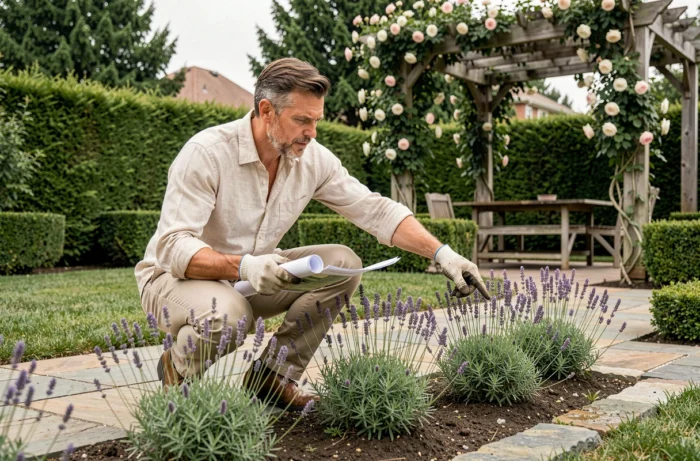
A sloping plot, clay soil that retains water, a south-facing exposure with not a single tree: this is the real starting point for most garden design projects. Entrusting this work to a landscaper is not just about choosing plants from a catalog. The role of this professional begins with reading the land, its boundaries, and its potential, even before discussing aesthetics.
Soil, slope, and water: what the land imposes on the landscaping project
You may have noticed that some plants wither even though they were sold as “easy to maintain”? The problem rarely comes from the plant. It comes from the soil.
A qualified landscaper starts by analyzing the nature of the soil: clayey, sandy, loamy, limestone. This data conditions everything else. Poorly drained clay soil excludes the majority of Mediterranean perennials, even if the climate seems favorable. Conversely, sandy soil in a rainy region will quickly lose its nutrients without prior amendment work.
Topography plays a comparable role. On a sloping plot, rainwater runs off instead of infiltrating. A landscape professional will create terraces, swales, or retaining walls to hold water where plants need it. Without this work, you end up watering at the bottom what you plant at the top.
When a landscaping project incorporates these constraints from the design stage, maintenance needs decrease in the long term. The garden works with the land instead of fighting against it. To explore this approach, Clic Garden’s services allow you to entrust the design to professionals who start from site analysis.
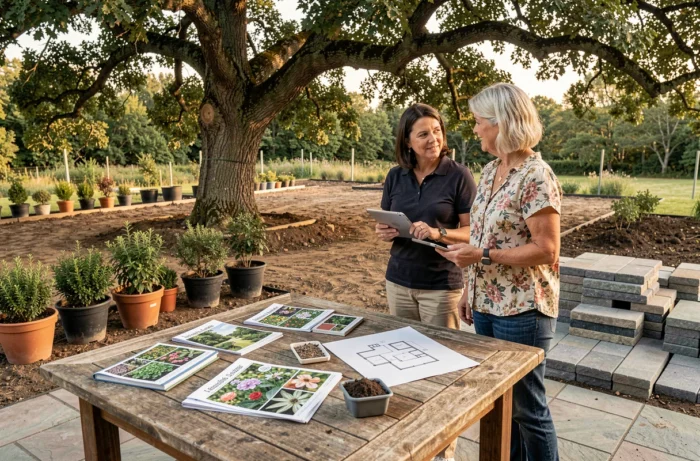
Garden design without lawn: a climate-adapted alternative
The lawn remains the default reflex in many projects. It provides a quick and uniform result. The problem is that it requires a lot of water, regular mowing, and it turns yellow as soon as watering restrictions apply.
Landscapers are increasingly turning to lawn-free gardens, mulched or covered with ground-cover plants. This trend responds to a logic of water conservation, but also of biodiversity. A mulched soil retains moisture, limits the growth of weeds, and nourishes the soil’s microfauna.
What ground-cover plants replace the lawn
Persistent ground covers like creeping thyme, lippia, or fine fescue require little water once established. Their maintenance is limited to an annual trim, compared to mowing every two weeks for traditional grass.
A mulched garden planted with ground covers consumes much less water than a traditional lawn. This choice works particularly well in regions subject to recurring drought episodes, but it also adapts to the heavy soils of northern France, where mulching regulates excess moisture.
The landscaper adapts the plant palette to the local context. Laying Mediterranean grass in Brittany or planting hydrangeas in Provence is agronomically misguided, even if both options are aesthetically appealing.
Choosing a landscaper: technical criteria before aesthetic criteria
Why does this choice deserve so much attention? Because the success of a landscaping project primarily depends on technical skills, not just artistic sense. A pretty 3D plan does not compensate for a lack of knowledge about drainage or local urban planning regulations.
Here are the concrete points to check before entrusting your garden creation project:
- The ability to perform a soil and exposure diagnosis, not just a quick visual survey of the land
- Knowledge of your municipality’s urban planning regulations (planting distances from property boundaries, permits for walls or raised terraces)
- Verifiable references on projects similar to yours, ideally in the same climatic zone
- A valid ten-year insurance policy, mandatory for landscaping masonry work (walls, terraces, outdoor stairs)
A competent landscaper asks questions about your land before showing photos of past projects. If the first conversation focuses on terrace materials and flower bed colors without addressing soil, drainage, or exposure, it’s a warning sign.
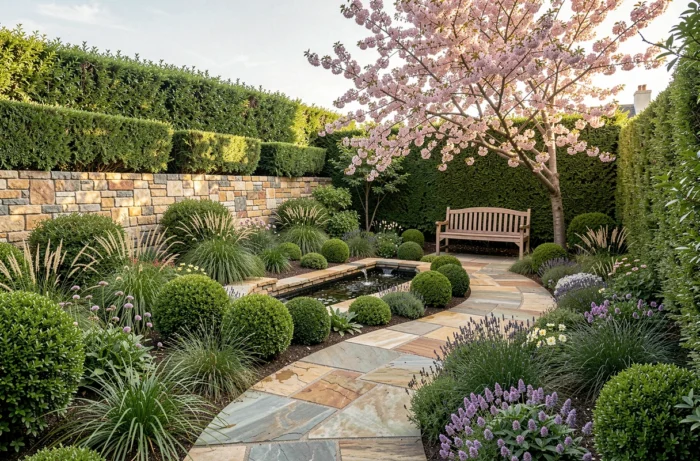
Budget for a landscaping project: underestimated items
The cost of plants and garden furniture is visible. The items that cause a budget to spiral are less obvious.
Earthworks and soil preparation
On a sloping or poorly drained plot, earthworks can represent the largest portion of the total budget. Leveling, removing excess soil, installing drainage: these tasks precede any planting and condition the durability of the whole.
Maintenance in the first two years
The plants installed by a landscaper are not self-sufficient from day one. The first two years require monitoring: installation watering, formative pruning, possible replacement of plants that did not take. This maintenance item is rarely included in the initial quote and deserves to be discussed in advance.
A realistic project includes a budget for creation and another for post-planting support. Neglecting maintenance in the first two years jeopardizes the entire investment.
- The earthworks and drainage, often absent from the initial “turnkey” quotes
- The cost of mineral or organic mulching, which varies greatly depending on the area to be covered
- The follow-up for the recovery of trees and shrubs, which may require several interventions in the first year
Hiring a landscaping expert to design a garden remains a long-term investment. A well-designed outdoor space from the start requires less rework, less watering, and fewer plant replacements over the years. The true cost of a poorly conceived garden is not measured at delivery, but three or four years later, when design errors become visible.