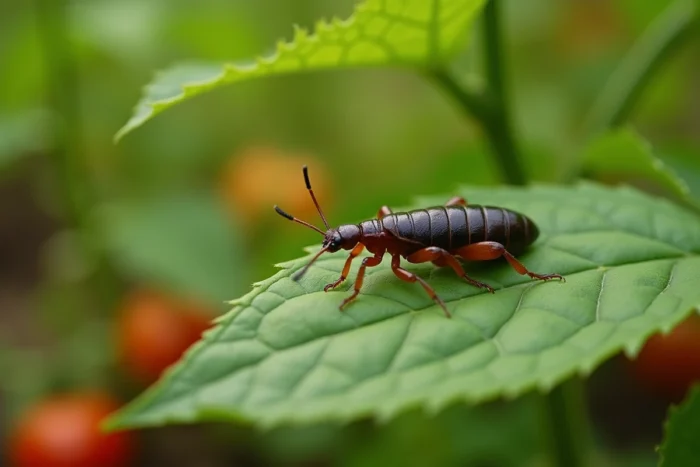
The ophone is one of those insects that people crush reflexively, convinced they are dealing with a cockroach. This beetle from the Carabidae family, often referred to by its scientific name Pseudoophonus rufipes, is a common inhabitant of European gardens.
Its oval body, dark brown to glossy black, and its characteristic reddish legs give it away, but not enough to avoid confusion with a cockroach. Understanding what it actually does in a vegetable garden or on a kitchen floor changes the perspective on its presence.
Diet of the ophone: an unknown omnivorous beetle
Competitors focus on the visual resemblance to the cockroach. The dietary angle, however, remains poorly documented. The ophone is a detritivorous and opportunistic predator. It feeds on decaying plant debris, fallen seeds, and also on small invertebrates like larvae or aphids.
This dual role, as a recycler and predator, makes it a discreet but active link in the soil’s food chain. In a vegetable garden, it contributes to the decomposition of organic matter and helps limit certain populations of pests harmful to crops.
To learn everything about the ophone insect and better understand its ecological role, one must accept to look at it differently than as an intruder. Its omnivorous diet brings it closer to the golden carabid, a recognized ally of gardeners, than to the German cockroach that infests kitchens.
However, this opportunistic feeding also explains why the ophone sometimes ventures into homes. Seeds stored in a garage, fruits fallen near a patio door, or a poorly closed composter can attract it close to buildings.
Ophone in the house: accidental visitor or sign of infestation
The ophone crossing a living room has not come to settle. It is a strictly outdoor insect that enters homes attracted by artificial light or simply by a miscalculation of its trajectory. It does not seek food or a place to lay eggs indoors.
This distinction is crucial. A German or Oriental cockroach colonizes a dwelling because it finds warmth, water, and food scraps. The ophone, however, does not reproduce in houses. Its occasional presence, especially in summer and early autumn, does not signal any hygiene issues.
Why the ophone enters more often in summer
The peak activity period of Pseudoophonus rufipes coincides with warm evenings when windows are left open and indoor lighting attracts nocturnal insects. The available data does not allow for precise quantification of this phenomenon, but field reports from pest control professionals converge: the majority of ophone sightings indoors occur between June and September.
A garden rich in low vegetation, mulch, or flat stones (which serve as daytime refuges) increases the likelihood of accidental intrusions. The ophone is light-averse: it hides during the day and becomes active at dusk.
Reliable criteria to distinguish the ophone from a cockroach
The ophone-cockroach confusion generates unnecessary pest control interventions every summer. Three visual criteria allow for a clear distinction without special equipment.
- The legs: in the ophone, they are distinctly reddish, contrasting with the dark body. Common cockroaches (German cockroach, Oriental cockroach) have legs of the same color as the body, brown or black.
- The antennae: those of the ophone are short and robust, barely longer than the head. The cockroach has thread-like antennae, often as long as the entire body.
- The body shape: the ophone has a rounded back with finely striated elytra, rigid to the touch. The cockroach has a flattened, flexible body designed to slip into crevices.
A fourth clue, less visual, helps confirm the identification: behavior. The ophone does not flee in a quick zigzag like a cockroach. It moves in a more straight line, less swiftly, and does not try to hide under furniture as soon as the light is turned on.
Coexisting with the ophone in the garden: adapted gardening practices
Rather than trying to eliminate the ophone, some gardeners integrate it into their soil management strategy. As an active decomposer of organic matter, it accelerates the recycling of plant residues at the base of crops.
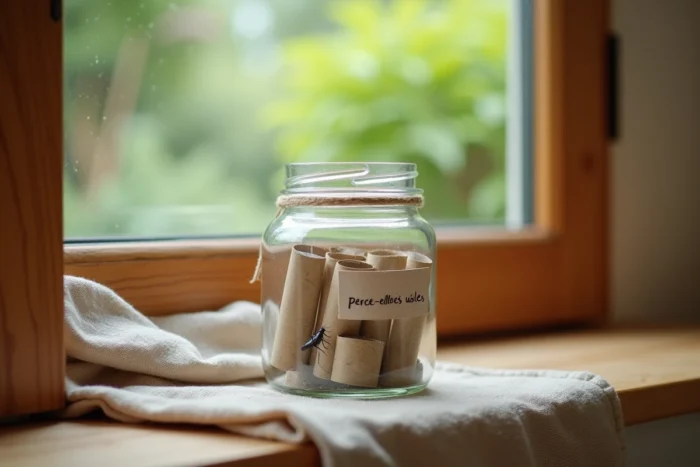
Specifically, maintaining refuge areas (flat stones, boards laid on the ground, thick mulch) encourages its presence in plots where it can regulate populations of small pests. This approach aligns with the logic of biological control through conservation, which involves modifying the habitat to favor the natural allies already present.
Limiting intrusions without chemicals
For those who prefer not to find ophones on the floor tiles, a few adjustments are sufficient:
- Reduce outdoor lighting near openings, or switch to warm spectrum bulbs (less attractive to nocturnal insects)
- Install screens on the most exposed windows and patio doors
- Keep the composter and piles of dead leaves at least a few meters away from the house walls
- Seal gaps under doors with brush door sweeps
No insecticide treatment is justified against the ophone indoors. A simple glass and a sheet of paper can capture it and release it outside, where it will resume its work as a decomposer.
The ophone remains a little-known beetle to the general public, often a victim of its resemblance to truly problematic species. Its role in the garden ecosystem, between decomposition and opportunistic predation, makes it more of an ally than an enemy. The next time a small black insect with reddish legs appears near the terrace, checking its antennae before reacting can prevent a costly mistake.