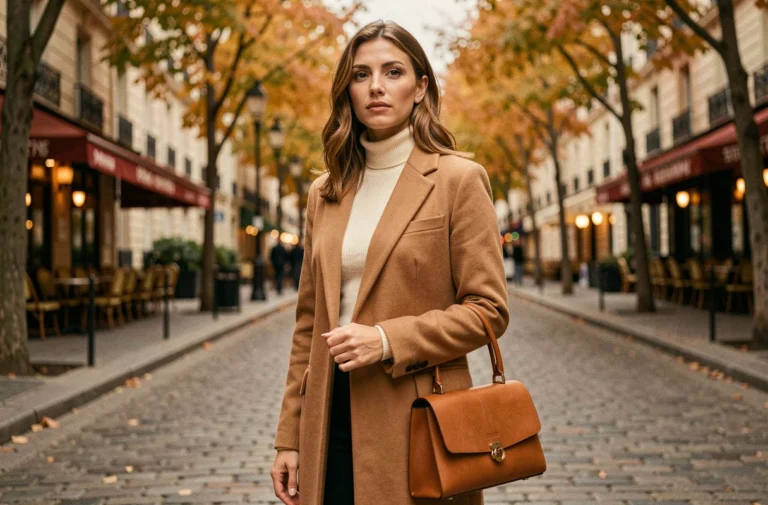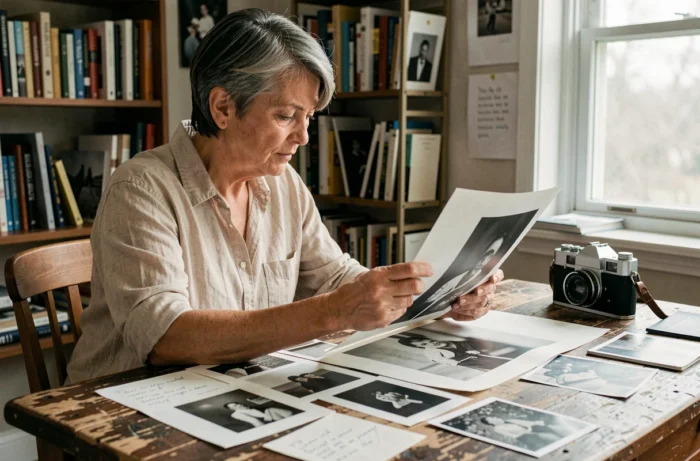
Béatrice Vonderweidt has traversed modeling, painting, and photography without ever abandoning a common thread: the image as a narrative of self. Her journey raises a question that the world of contemporary photography explores from increasingly varied angles, between classic self-portrait and recent digital devices. The autobiographical image, long confined to the visual diary, now occupies a broader space, where the photographed body becomes a text in its own right.
Autobiographical image and self-photography: what the term really encompasses
Autobiographical photography is not limited to selfies or posed self-portraits in front of a mirror. It refers to a practice where each image contributes to a personal narrative constructed over time. The photographer does not document a moment: they develop a visual narration that conveys something about their identity, transitions, and ruptures.
What distinguishes this approach from a simple photo album is the narrative intentionality. The framing, lighting, and choice of setting do not serve aesthetics alone. They carry a message about the person who is staging themselves.
In Béatrice Vonderweidt’s work, this intentionality is evident in the transition from one discipline to another. As detailed in Béatrice Vonderweidt’s journey on Mlle E, the transition from modeling to visual creation is not an ordinary career change. The body, initially a passive support in front of another’s lens, becomes the active subject of a personal narrative.
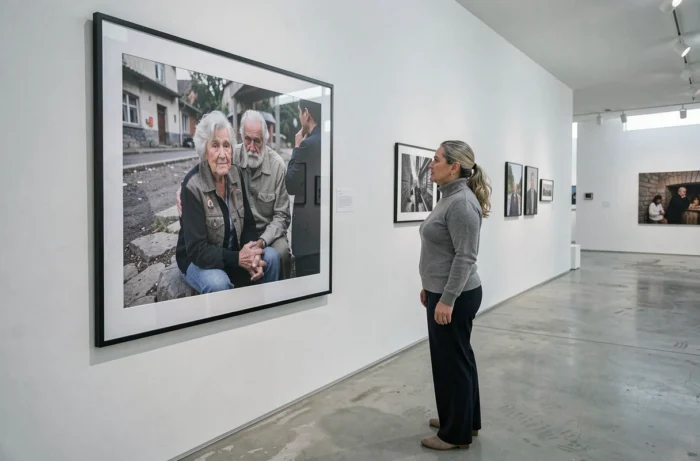
Béatrice Vonderweidt: from photographed body to body that photographs
Modeling places the body within a framework decided by others. The artistic direction, styling, and lighting belong to the photographer or the brand. The model interprets but does not tell their own story.
Stepping to the other side of the lens reverses this relationship. The former model becomes the author of her own image. This shift is not anecdotal: it alters the relationship to the body, to the external gaze, and to the very notion of self-representation.
Painting constituted an intermediate step in this journey. The pictorial gesture offers total control over representation, without the mechanical constraints of the camera. Returning to photography, but as a creator, completes a cycle where the self-image has been explored from three distinct angles: photographed object, painted subject, photographer author.
How the transition through painting changes the photographic gaze
A photographer who has practiced painting frames differently. The pictorial composition trains one to think in surfaces, masses, and color balances. The gaze shaped by painting produces more constructed images, where chance recedes in favor of deliberate visual architecture.
This dual training remains rare in the field of autobiographical photography. Most practitioners come from either photojournalism or fine arts photography. The path of modeling, painting, photography traces a unique trajectory that nourishes a personal visual vocabulary.
Algorithmic self-portrait and AI avatar: the new frontier of self-image
Autobiographical photography is experiencing a recent transformation that artist portraits rarely address. In recent years, creators have been using AI-driven avatars to represent themselves without directly showing their bodies. The principle: a voice recording associated with a digital avatar replaces the filmed image.
This practice, sometimes referred to as algorithmic self-portrait, raises questions that Vonderweidt’s approach illuminates by contrast:
- The AI avatar allows one to tell their life story without exposing their body, which resolves certain blocks related to self-image, but removes the physical dimension of the narrative
- Traditional autobiographical photography engages the real body, with its marks, aging, scars, all narrative elements that the avatar smooths over
- The transition through modeling, as seen in Vonderweidt’s case, provides a keen awareness of what the body shows and hides, an awareness that the digital avatar circumvents rather than engages
To speak of oneself without showing oneself is the exact opposite of showing oneself without speaking of oneself, which was the position of the model. Between these two poles, autobiographical photography occupies a middle ground where the body remains visible but where it is the author who decides what it conveys.
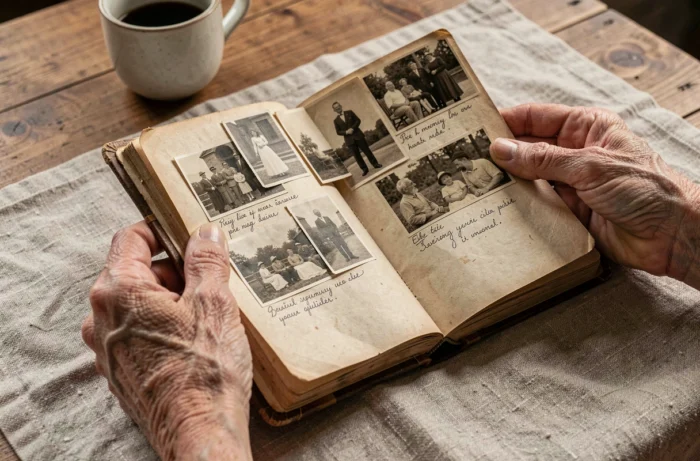
Therapeutic photography: when the image reconciles with the body
Today, some photographers offer sessions with the explicit goal of helping individuals reconcile with their image. This practice, documented by recent field reports, situates photography in an almost clinical register.
The principle rests on a simple observation: many people avoid photos of themselves because they do not recognize themselves in the produced image. Therapeutic photography aims to restore an image that the person accepts as their own, not a flattering image, but a truthful one.
This movement aligns with the autobiographical approach through a specific point: in both cases, the image is not a finished product but an identity process. The photographic result matters less than what unfolds during the shooting, the negotiation between what one wants to show and what one accepts to see.
Limitations of the approach
Field feedback diverges on one point. Some practitioners report lasting effects on the relationship to self-image. Others observe that the benefit remains tied to the session’s framework and quickly fades in daily life. Long-term autobiographical photography, as Vonderweidt practices it through her various disciplines, offers an alternative: continuous work rather than a one-off session.
The autobiographical image does not need to claim to heal anything to hold value. It documents, structures, and gives form to a narrative that words alone do not always carry. Béatrice Vonderweidt’s journey, from the exposed body to the narrated body, shows that this narrative power is built over time, by changing mediums as well as posture in front of the lens.