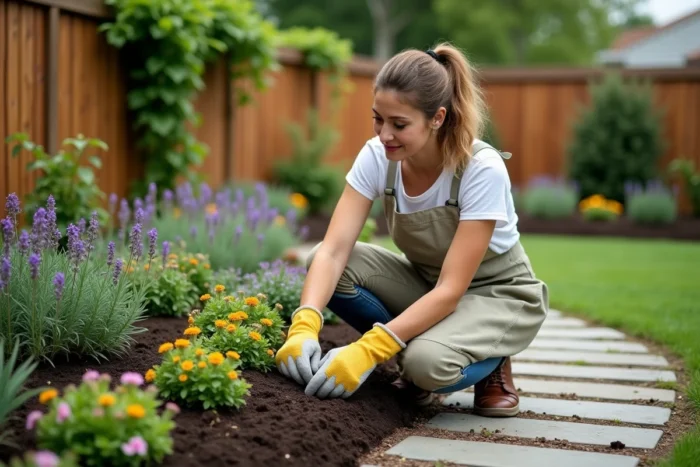
A gently sloping plot, clay soil that retains water three days after each shower, an aging hedge of thuja along the street: it is often from these concrete constraints that a true outdoor green space development project begins. Before choosing plants or garden furniture, it is wise to first address what the land imposes, saving time (and money).
Stormwater Management: The Constraint That Conditions Everything Else
Several French municipalities are now including minimum permeable surface requirements for private gardens in their local urban plans (PLU). For new constructions or significant renovations, retention or infiltration systems for stormwater may be required: vegetated swales, drainage trenches, recovery tanks.
In practice, this means that one can no longer design a terrace with solid slabs or a concrete path without checking local regulations. The choice of materials determines the project’s compliance. Stabilized gravel, grass-jointed pavers, cellular slabs: these solutions maintain soil permeability while providing comfortable circulation.
Professionals who support this type of project, like those found on the Jamet Espaces Verts website, integrate these hydraulic constraints from the design phase to avoid costly revisions later.
A swale planted with grasses or marsh irises along a path serves a dual purpose: it drains runoff and creates a living border that requires little maintenance. This way, both the technical issue and the garden’s aesthetics are addressed in one action.
Garden Climate Zoning: Sun, Shade, and Wind Before Plants
Most guides talk about “choosing suitable plants.” The real issue starts earlier: mapping the microclimates of your land. The same garden can have a scorching full-sun area in summer, a windy corridor between two buildings, and a damp shaded corner under a mature tree.
How to Observe Your Land Before Planting
Note the sunlight at three times of the day (morning, noon, late afternoon) over a week, ideally in June or July. Identify areas where the soil dries quickly and those that remain moist. Identify wind corridors, often between the house and a neighboring wall.
This simple survey radically changes the list of possible plants:
- Mediterranean perennials (lavender, rosemary, sage) thrive in full sun on well-drained soil but wither in a damp, shaded corner.
- Herbs like parsley and chives tolerate partial shade and fit well into both a landscaped bed and a raised vegetable garden.
- Ornamental grasses (miscanthus, stipa) withstand wind and stabilize slopes, where a traditional shrub would struggle to anchor.
- Ground cover plants (pachysandra, periwinkle) solve the problem of dense shade areas where grass refuses to grow.
This logic of climate zoning, rather than just functional, prevents planting failures and reduces long-term watering. Feedback on this point varies, but a garden designed according to its microclimates generally requires less maintenance than one planted “by feel.”
Multi-Year Phasing of Work: Avoiding Prolonged Construction
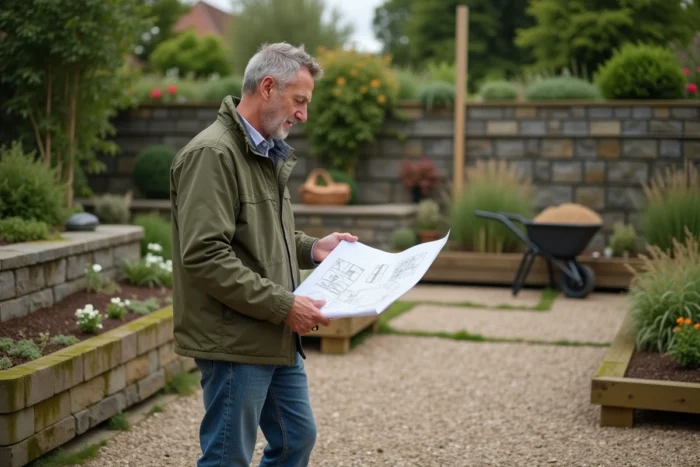
We want to do everything in the first year. The budget, however, says otherwise. Landscape professionals recommend thinking of outdoor development as a phased investment over two to three years, with an overall plan defined from the start.
A Logical Sequencing of Expenses
The classic mistake is to plant shrubs before addressing circulation and networks (irrigation, lighting, drainage). When pipes are laid afterward, you uproot what you just planted. The effective sequencing is:
- Year 1: earthworks, leveling, buried networks (water, electricity), creation of paths and the terrace.
- Year 2: planting of structural trees and shrubs, establishment of main beds, installation of a possible vegetable garden or raised wooden bed.
- Year 3: adjustments after observation (replacement of plants that did not take, addition of perennials, installation of final garden furniture).
This phasing smooths out expenses and allows observation of how the garden reacts to the seasons before finalizing plant choices. Planning a follow-up visit six to twelve months after creation is part of good practices: this is when you can spot soil compaction, poorly established plants, and drainage issues that were not visible at first.
Vegetable Garden and Aromatic Plants Integrated into the Landscape Design
Separating the “beautiful garden” from the vegetable garden is a stubborn habit. However, one can mix vegetables, herbs, and perennials in the same bed with a solid aesthetic result.
A square of cherry tomatoes bordered by basil and marigolds (which repel certain pests) fits into a flowerbed just as well as a rosebush. Mixing edibles and ornamentals reduces treatments by promoting biodiversity. Frisée lettuce, kale, or rhubarb bring textures and colors that some ornamental plants cannot match.
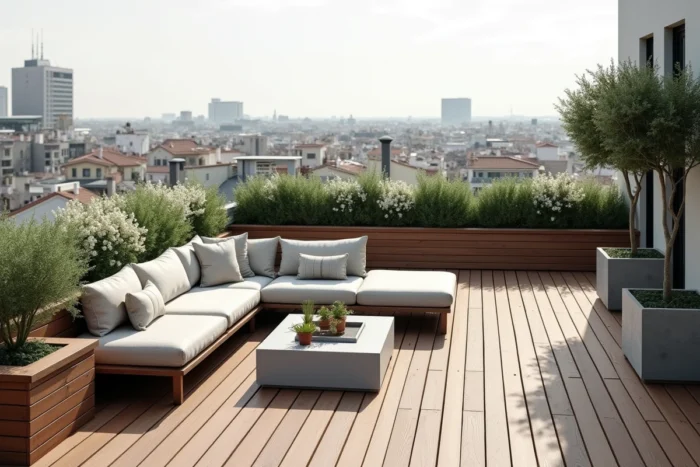
On a balcony or terrace, wooden containers can hold both herbs (thyme, mint, coriander) and trailing strawberries. The soil must remain light and well-drained: a mix of potting soil and perlite works better than compacted garden soil in a container.
Ultimately, the development of outdoor green spaces hinges on a few decisions made at the right time: addressing water and soil before thinking about plants, observing microclimates before choosing vegetation, and accepting that the garden will evolve over several seasons. A solid plan from the start, even modest, yields better results than a substantial budget spent without method.