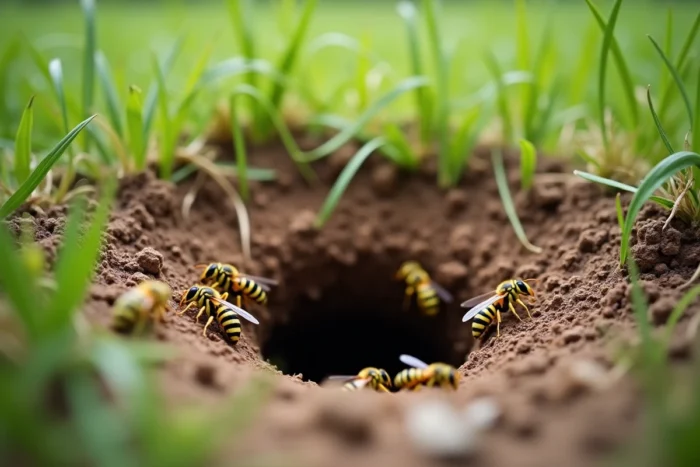
Ground wasps include several species of Vespidae that establish their colonies in the soil, often in old rodent burrows or natural cavities. Discovering a wasp nest in the garden usually triggers an immediate reaction, sometimes disproportionate to the actual risk. Understanding the biology of the colony and the French regulatory framework allows for making the right decision, between targeted destruction and temporary cohabitation.
Certibiocide TP18 Certification and Intervention Framework in France
The destruction of an underground wasp nest is no longer the responsibility of firefighters. An interministerial circular from 2014 confirmed the cessation of systematic interventions at private residences, except in life-threatening emergencies (severe allergic reactions, immediate danger). In practice, for a nest discovered in a private garden, it is the landowner who must contact a certified Certibiocide TP18 professional.
This certification guarantees that the technician is skilled in the use of biocides authorized for product type 18 (insecticides). It requires specific training and periodic renewal. We recommend checking this certificate before any intervention, as an individual using an unauthorized insecticide exposes themselves to penalties and health risks for non-target soil fauna.
Legal responsibility is clear: it falls on the owner of the parcel where the nest is located, even if the colony poses a danger to the neighboring garden. In co-ownership or at property boundaries, amicable dialogue remains the first step. In case of persistent danger, a registered letter can formalize the request, before any potential recourse.
For everything you need to know about ground wasps and the associated procedures, it should be noted that neither the firefighters nor the town hall are the default contacts in most situations.
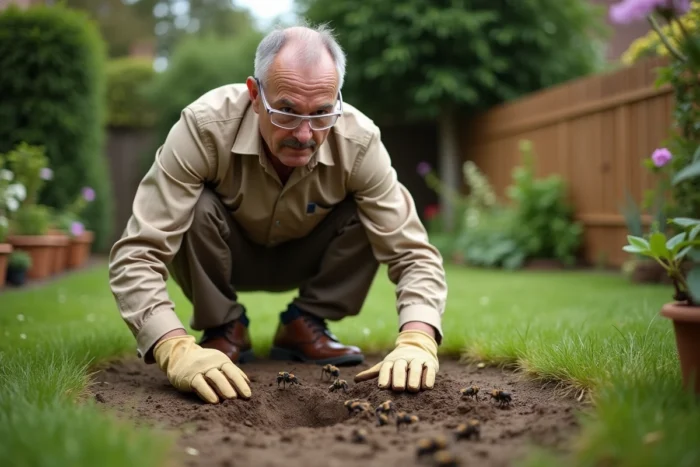
Identifying a Ground Wasp Nest in the Garden Soil
An underground nest is first identified by aerial traffic. The workers follow straight trajectories to a specific point in the soil, often a hole a few centimeters in diameter in the lawn, a slope, or a terrace edge. The back-and-forth movement intensifies during the warm hours.
Several signs can confirm the presence of a colony:
- A clear opening in the soil, sometimes surrounded by loose earth pushed out by the workers enlarging the cavity.
- A dull buzzing audible in the immediate vicinity of the hole, especially in the late afternoon when the workers return en masse.
- Defensive wasps within a radius of two to three meters around the entrance, whereas they are usually indifferent to humans in foraging areas.
Do not confuse a ground wasp nest with the burrows of solitary bees (Andrena, Halictus), which dig individual burrows without collective defensive behavior. Solitary bees do not form colonies and pose virtually no sting risk. Their presence in the lawn is an indicator of healthy soil.
Assessing the Risk Before Destroying the Colony
Not all ground wasp nests warrant destruction. Vespidae colonies are annual: the queen alone establishes the nest in spring, the population peaks in late summer, and then the entire colony dies with the first frosts. Only the young fertilized queens hibernate, in a completely different location.
A nest located at the back of the garden, far from traffic areas and the terrace, can be left in place until autumn. Social wasps contribute to the natural regulation of pests: caterpillars, flies, aphids. Removing an active colony also means removing a biological control agent for several months.
Destruction is justified in specific cases:
- Immediate proximity to a children’s play area, a terrace, or a house entrance.
- Someone allergic to hymenopteran venom in the household (risk of anaphylactic shock).
- Nest located in regularly mowed or trampled soil, where vibrations trigger defensive exits.
Outside of these situations, temporary cohabitation remains the most reasonable option. Marking the area with a stake and ribbon is often enough to avoid incidents until the colony naturally disappears.
Techniques for Eliminating an Underground Nest and Mistakes to Avoid
When destruction is necessary, the intervention should take place at night or at dusk, when almost all the workers have returned to the nest. The body temperature of wasps decreases with light, which reduces their reactivity.
The certified professional typically uses a pesticide powder based on permethrin or deltamethrin, applied directly into the nest opening using a powder applicator. The product disperses through the galleries as the workers pass through. The effect is gradual: the colony dies out over a few days.
Methods to Absolutely Avoid
Pouring boiling water into the hole does not destroy the colony. The underground structure has branches that the liquid does not reach. Surviving workers become extremely aggressive. The result: multiple stings and an active nest.
Blocking the hole with soil or cement is even worse. Wasps dig an escape route, sometimes several meters from the original point, including under a terrace or within a wall of the house. This method shifts the problem without resolving it.
Pouring gasoline or any other flammable solvent into the ground poses a danger to the user, pollutes the soil, and can contaminate a shallow groundwater table. No professional resorts to this technique.
Preventing the Reestablishment of a Colony in the Same Location
Once the colony is eliminated, filling the cavity with compacted soil limits the risk that a founding queen will reuse the site the following spring. Queens searching for new sites look for pre-existing cavities: removing the access point reduces the attractiveness of the area.
Regularly maintaining the lawn and filling in rodent holes as they appear remains the best prevention. A dense and well-maintained soil offers fewer nesting opportunities than a ground scattered with abandoned burrows.
Commercial wasp traps have no effect on the establishment of a nest. They capture workers seeking sweet food, without reaching the queen or significantly reducing the colony’s population. Their intensive use can also trap beneficial pollinators, a point that several beekeepers regularly report.