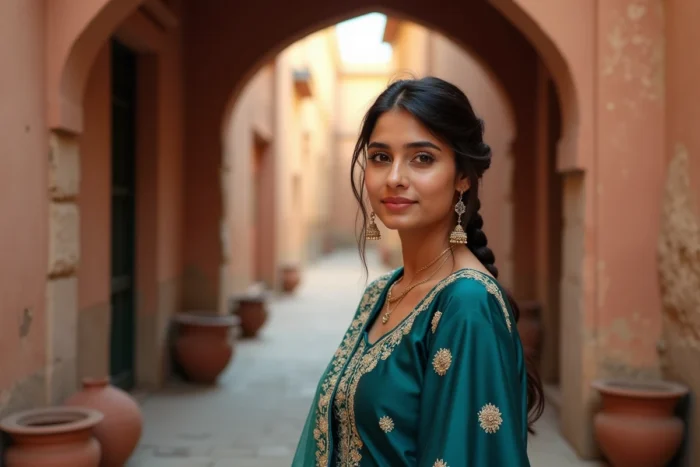
The beauty of Indian women cannot be reduced to a single archetype. India encompasses hundreds of ethnic, linguistic, and cultural groups, each with aesthetic codes that vary from region to region, caste to caste, and generation to generation. Speaking of Indian beauty in the singular erases this reality, replacing it with a fixed image, often inherited from Bollywood or advertising.
Colorism and Caste Hierarchy in Indian Beauty Standards
Colorism, or discrimination based on skin tone within the same ethnic group, deeply structures representations of beauty in India. Advertisements for skin-lightening creams have long occupied a massive share of media spaces, associating social success with a fair complexion. This bias is not merely a passing trend: it is rooted in the caste hierarchy and its aesthetic codes.
Since 2020, several Indian states such as Tamil Nadu and Karnataka have seen the emergence of collectives of Dalit and Adivasi women who publicly claim their physical traits (dark skin, curly hair, features that the dominant norm labels as “non-Brahmin”) as symbols of political resistance and identity pride. These movements denounce colorism not as a matter of personal taste but as a direct extension of caste domination in the bodily sphere.
This phenomenon marks a break. Where previous generations internalized these norms, as analyzed in several publications on the Beauty Girl blog, women today assert their appearance as a conscious political act.
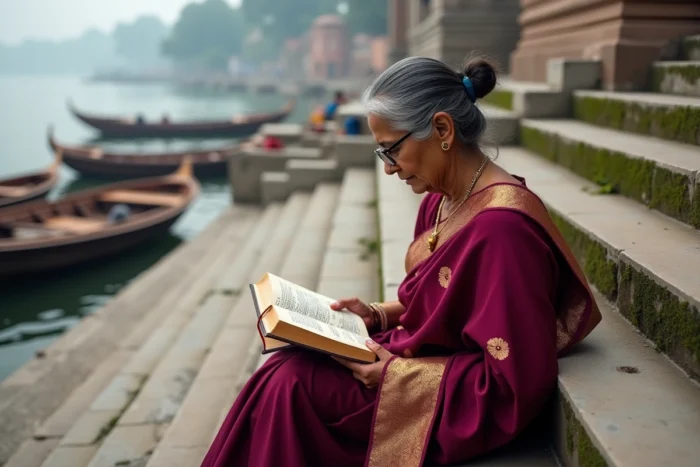
Indian Generation Z: When Beauty Detaches from Marriage
According to a study published in 2023 in the journal South Asia: Journal of South Asian Studies, the urban Indian Generation Z increasingly associates feminine beauty with self-assertion, professional success, and financial independence. Conformity to family expectations or marriage is declining as a criterion defining the “beautiful woman”.
This shift does not affect the country uniformly. Metropolises like Mumbai, Bangalore, or Chennai concentrate this evolution, driven by access to social media and content produced outside the traditional Bollywood circuit. In rural areas, aesthetic expectations remain more closely tied to local community norms.
OTT Platforms and New Representations
The rise of Indian OTT platforms (Netflix India, Amazon Prime India, Hotstar) has changed the visibility of bodies and faces on screen. The series and films produced for these platforms showcase actresses with more varied physical profiles than traditional commercial cinema. The contrast with mainstream Bollywood productions, which still largely favor a standardized type of beauty, is stark.
This diversification on screen is not merely aesthetic. It accompanies narratives where female characters occupy complex roles, far from the decorative figure or passive lover. The link between physical representation and narrative representation is strengthened.
Indian Beauty Influencers and Redefining Aesthetic Norms
According to an article in the journal Recherches féministes (Université Laval, 2022), Indian beauty influencers on YouTube and Instagram play an increasingly important role in redefining local aesthetic norms. They place greater value on dark skin tones, textured hair, and non-standardized body types, in explicit reaction to standards inherited from Bollywood and advertising.
This online movement is not limited to a positive discourse on appearance. Several content creators document care rituals from specific regional traditions, placing them back in their cultural context rather than presenting them as mere “exotic beauty tips”.
- Tamil creators share recipes using turmeric and coconut oil, explaining their roots in family practices passed down over generations, far from the Western “wellness” version.
- Influencers from Northeast India (Assam, Manipur, Nagaland) highlight physical traits and aesthetics often rendered invisible in dominant national media.
- Women from Adivasi communities use social media to directly contest advertisements for skin-lightening products, showcasing the beauty of dark skin without filters or retouching.
Ayurveda and Regional Rituals: What Marketing Simplifies
Ayurveda is often cited as “the” pillar of Indian beauty. The reality is more fragmented. Each region has its own ingredients and care protocols, which do not all fall under the strict definition of Ayurvedic tradition. The plant powders from Kerala, oils from Rajasthan, and clays from Karnataka respond to distinct climates, skin types, and cultural heritages.
Reducing this diversity to a single marketing keyword erases local knowledge in favor of a homogeneous and marketable vision. Indian women who pass on these practices do so within a specific family and community framework, not in a logic of “universal beauty routine”.
Diversity of Indian Women: Beyond the Unique Image
India has hundreds of languages, dozens of clothing systems, and just as many aesthetic codes. A woman from Kerala, a Rajput woman, and a Naga woman do not share the same features, rituals, or beauty references. There is no Indian beauty, but Indian beauties.
This plurality remains poorly represented in international media, which select a physical type (fair skin, long and straight hair, fine features) and present it as “the” Indian woman. The same reflex exists in India with the media dominance of Hindi film actresses over other regional film industries.
The movements led by Dalit and Adivasi women, creators from the Northeast, and influencers who reject filters do not seek to replace one standard with another. They remind us that beauty, in India as elsewhere, has never been a fixed category. Norms shift when those who have been excluded speak up.